

Table of Contents
Toggle1. What Is Marketing?
Marketing is the process of promoting, selling, and distributing a product or service to potential customers.
It involves communication, strategy, creativity, and analysis — all aimed at meeting customer needs and growing business profits.
Marketing can be divided into two major categories:
- Traditional Marketing
- Digital Marketing
1. What Is Traditional Marketing?
Traditional Marketing refers to the conventional form of marketing used before the digital age.
It includes all offline advertising methods — such as print media, TV, radio, billboards, and direct mail.
Key Components of Traditional Marketing
- Television Ads – Commercials broadcasted on TV channels.
- Radio Ads – Audio promotions on local or national radio stations.
- Newspapers & Magazines – Printed advertisements and sponsored stories.
- Billboards & Posters – Large visual ads placed in public spaces.
- Direct Mail – Flyers, brochures, or postcards sent to homes.
- Events & Sponsorships – Brand presence at fairs, seminars, or sports events.
Reach a wide audience and build brand awareness through offline visibility.
2. What Is Digital Marketing?
https://yogeshdigitalexpert.com/Digital Marketing refers to promoting products or services using the internet, digital devices, and online platforms.
It includes strategies such as:
- Social Media Marketing (SMM)
- Search Engine Optimization (SEO)
- Pay-Per-Click (PPC) Advertising
- Email Marketing
- Content Marketing (Blogs, Videos, Podcasts)
- Affiliate Marketing
- Influencer Marketing
Key Differences Between Digital and Traditional Marketing
Aspect | Traditional Marketing | Digital Marketing |
Medium | Offline (TV, print, radio) | Online (websites, apps, social media) |
Reach | Limited to physical area | Global and scalable |
Cost | High | Cost-effective |
Targeting | General audience | Highly specific targeting |
Tracking | Difficult | Easy with analytics tools |
Interaction | One-way communication | Two-way engagement |
Speed | Slow response | Instant results |
Flexibility | Hard to change | Easy to edit anytime |
Measurability | Limited metrics | Real-time analytics |
ROI | Hard to calculate | Easily measurable |

🧠 5. Advantages of Traditional Marketing
Even though digital marketing dominates today, traditional marketing still has power, especially for local and large-scale audiences.
✅ Top 10 Benefits:
- High Local Reach – Great for reaching local communities or city-wide audiences.
- Trust & Credibility – Printed ads often appear more authentic to older generations.
- Brand Recall – Physical ads like billboards and magazines leave a strong visual memory.
- Personal Touch – Flyers, posters, and face-to-face events feel more personal.
- Mass Exposure – TV and radio reach millions at once.
- No Internet Needed – Works for people without digital access.
- Long Shelf Life – Magazines and brochures can last for weeks or months.
- Easy to Understand – No technical knowledge required for the audience.
- Emotional Connection – TV commercials and jingles create strong brand emotion.
- Effective for Older Demographics – Older consumers engage more with print and TV ads.
⚙️ 6. Disadvantages of Traditional Marketing
- Expensive – TV and print ads cost thousands or even lakhs per campaign.
- Hard to Measure – You can’t track how many people actually saw your ad.
- Limited Interaction – Customers can’t immediately respond or ask questions.
- Time-Consuming – Creating and distributing print material takes time.
- Lack of Flexibility – Once printed or aired, changes can’t be made.
- Geographic Limitation – Restricted to certain locations.
- Less Engagement – One-way communication only.
- Declining Audience – People are shifting from TV/newspapers to online platforms.
- Low ROI – Hard to know what works, so returns may be lower.
- Environmental Impact – Uses paper, printing, and physical resources.
🌐 7. Advantages of Digital Marketing
Digital Marketing has revolutionized how businesses connect with customers.
It’s powerful, measurable, and accessible to everyone — from startups to big brands.
✅ Top 10 Benefits:
- Global Reach – Reach audiences worldwide instantly.
- Cost-Effective – Even small budgets can achieve big results.
- Precise Targeting – Choose your audience by age, gender, location, and interests.
- Real-Time Analytics – Measure every click, view, and conversion.
- Instant Feedback – Engage with customers through comments, likes, and DMs.
- Content Variety – Use blogs, videos, reels, podcasts, and more.
- Automation Tools – Schedule posts, emails, and ads easily.
- Higher ROI – Spend less, earn more with the right strategy.
- Brand Building – Consistent content creates long-term brand visibility.
- 24/7 Availability – Your online presence never sleeps.
⚠️ 8. Disadvantages of Digital Marketing
- Requires Internet – No internet, no reach.
- High Competition – Millions of ads compete for attention.
- Constant Updates – Algorithms and trends change frequently.
- Security Risks – Data privacy and hacking threats.
- Negative Feedback – Public criticism can spread quickly.
- Time-Consuming – Needs consistent content and monitoring.
- Technical Knowledge Needed – SEO, analytics, and paid ads require skills.
- Ad Fatigue – Too many ads can annoy users.
- Dependence on Platforms – If an account is banned or suspended, reach is lost.
- Short Attention Span – Online users scroll fast and skip ads.
🔍 9. Detailed Comparison (Point-by-Point)
1️⃣ Reach
- Traditional: Local or regional reach.
- Digital: Global reach with targeted segmentation.
2️⃣ Cost
- Traditional: High setup and recurring costs.
- Digital: Budget-friendly with scalable campaigns.
3️⃣ Communication
- Traditional: One-way message.
- Digital: Two-way, interactive engagement.
4️⃣ Flexibility
- Traditional: Difficult to change campaigns.
- Digital: Edit or pause ads anytime.
5️⃣ Speed
- Traditional: Slow process — days or weeks.
- Digital: Instant publishing.
6️⃣ Tracking
- Traditional: No exact metrics.
- Digital: Detailed analytics (CTR, conversion rate, bounce rate, etc.)
7️⃣ Customization
- Traditional: Same message for everyone.
- Digital: Personalized marketing per user.
8️⃣ Engagement
- Traditional: Passive audience.
- Digital: Active participation through likes, shares, and comments.
9️⃣ ROI Measurement
- Traditional: Guesswork.
- Digital: Real-time data for ROI.
🔟 Longevity
- Traditional: Physical ads stay longer but static.
- Digital: Online content can last forever with updates.
📊 10. Examples of Each Type
💡 Traditional Marketing Examples:
- Coca-Cola’s TV commercials
- Newspaper ads for real estate
- Radio jingles for local stores
- Billboards on highways
- Brochures for colleges and institutes
💻 Digital Marketing Examples:
- Instagram ads by clothing brands
- YouTube influencer promotions
- SEO blogs driving organic traffic
- Google Ads for product sales
- Email marketing campaigns from Amazon or Flipkart
🧭 11. When to Use Traditional Marketing
Use traditional marketing when:
- Your target audience is older (40+).
- You’re promoting local businesses (shops, hospitals, schools).
- You want brand credibility through print or TV.
- You’re launching a large-scale product needing mass exposure.
- Internet usage in your area is limited.
🌎 12. When to Use Digital Marketing
Use digital marketing when:
- You want to reach a global audience.
- You have a limited budget but want measurable results.
- Your target audience is young and online.
- You prefer real-time interaction with customers.
- You need data insights for smarter campaigns.
🧩 13. Integration: Best of Both Worlds
The smartest businesses use both marketing types together.
🔄 Example:
- Use TV ads for mass awareness (traditional).
- Use social media ads for retargeting and engagement (digital).
This hybrid approach ensures you reach all audience segments effectively.
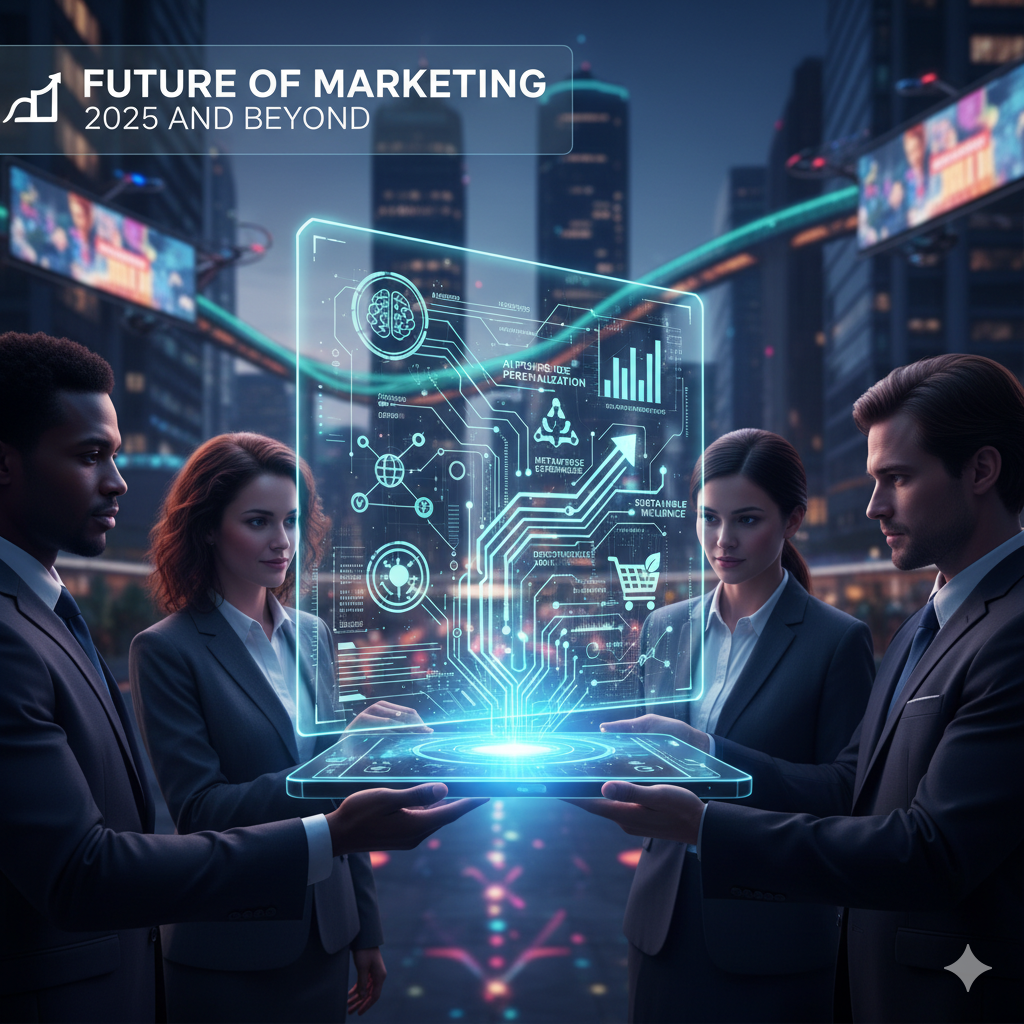
📈 14. Future of Marketing in 2025 and Beyond
The marketing world is evolving rapidly.
Let’s look at future trends shaping both types:
🚀 Digital Marketing Trends:
- AI-powered personalization
- Voice search optimization
- Short-form video dominance
- Data privacy and transparency
- Influencer & micro-influencer growth
- Augmented Reality (AR) advertising
- Chatbot-based customer service
- Social commerce (buying directly through social media)
🛰️ Traditional Marketing Trends:
- Integration with digital tools (QR codes, NFC tags)
- Experiential marketing (interactive events)
- Sustainable print materials
- Niche local sponsorships
- Hybrid ad strategies combining offline and online tracking
🧮 15. ROI Comparison: Which One Gives Better Results?
Metric | Traditional Marketing | Digital Marketing |
Investment | High | Low to medium |
Reach | Limited | Unlimited |
Lead Conversion | Low | High |
Tracking | Manual | Automated |
Speed | Slow | Fast |
Flexibility | Rigid | Dynamic |
ROI Measurement | Difficult | Simple |
Overall ROI (Average) | 25–35% | 50–70% |
✅ Result: Digital Marketing clearly provides higher ROI and flexibility.
🧭 16. Case Study Examples
📘 Case Study 1: Local Restaurant
- Traditional: Distributed flyers → 100 responses
- Digital: Ran Facebook ads → 1,000+ orders in 1 week
📗 Case Study 2: Real Estate Company
- Traditional: Newspaper ads → 20 leads
- Digital: Google Ads → 300 qualified leads
📙 Case Study 3: Clothing Brand
- Traditional: Billboard → High visibility
- Digital: Instagram Reels → Direct purchases with tracking
👉 Lesson: Digital marketing offers more measurable and cost-efficient outcomes.
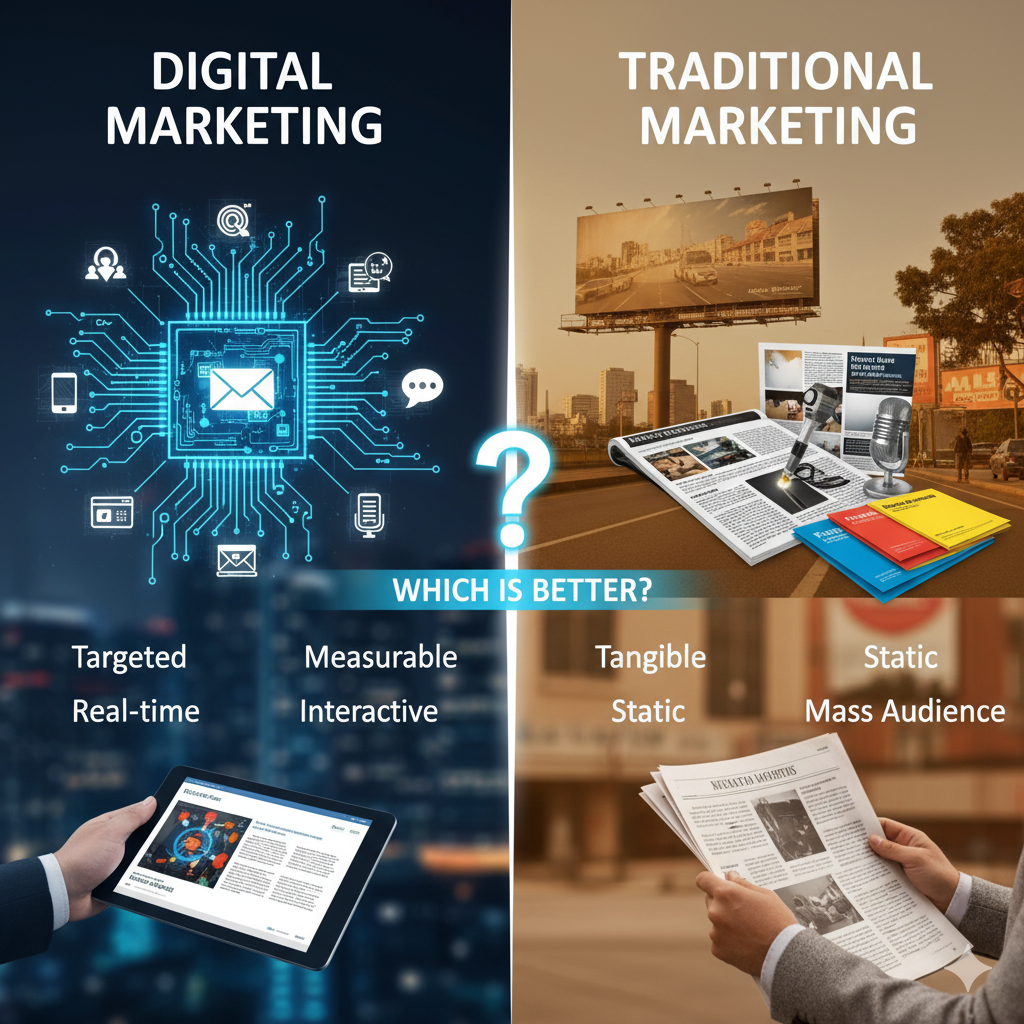
🧭 17. Which One Is Better in 2025?
While both have their strengths, digital marketing is leading due to its:
- Real-time analytics
- Global reach
- Low cost
- Personalization
- Interactivity
However, traditional marketing still matters for brand trust and offline engagement.
The best strategy is a mix of both — traditional for awareness, digital for conversion.
💬 18. Conclusion
In today’s era, where 80% of people use smartphones and social media daily, digital marketing has become the heart of modern business.
But we should not completely ignore traditional marketing — it still connects emotionally with offline audiences.
💡 Final Takeaways:
- Use traditional marketing for trust and brand image.
- Use digital marketing for engagement and measurable results.
- Combine both for the maximum impact.
🧾 19. Key Summary Points
- Marketing = Connection + Communication + Conversion.
- Traditional = Offline; Digital = Online.
- Digital marketing is faster, cheaper, and trackable.
- Traditional marketing builds emotional and local connection.
- The future is hybrid — combining both methods.
- Focus on your target audience, budget, and goals before choosing.
📢 20. Final Verdict
Factor | Winner |
Reach | Digital |
Engagement | Digital |
Trust | Traditional |
Cost | Digital |
Speed | Digital |
ROI | Digital |
Local Branding | Traditional |
Global Branding | Digital |
🏁 Overall Winner: Digital Marketing (with the support of traditional methods)

Frequently Asked Questions (FAQs)
Q1: Is traditional marketing dead in 2025?
Marketing is about communication — telling people what your product is, why it matters, and why they should choose it. That core purpose has not changed in centuries.
But how we communicate has changed.
| Old Reality (Before 2010) | New Reality (2025) |
|---|---|
| People read newspapers, watched TV, listened to radio. | People scroll Instagram, YouTube, Facebook, Snapchat, OTT platforms. |
| Brands relied on billboards, flyers, TV ads, radio jingles. | Brands use digital ads, influencers, email, SEO, social media. |
| Marketing was one-way. | Marketing is two-way and interactive. |
So traditional marketing didn’t die — consumer behavior shifted, and marketing methods shifted accordingly.
🎯 Why People Thought Traditional Marketing Would Die
Around 2015–2021, digital marketing exploded because:
Smartphones became universal
Social media platforms turned into advertising machines
Businesses saw lower cost and higher targeting
Performance tracking became easy
Many believed digital would fully replace traditional marketing.
But something surprising happened…
🔄 The Rebound of Traditional Marketing
After years of digital ads dominating:
People got ad fatigue
Everyone was shouting online → noise increased
Attention span reduced
Consumers started ignoring digital ads
Meanwhile, traditional marketing started feeling:
More real
More credible
More **trustworthy`
For example:
A good advertisement on a bus stop can be more memorable than 100 Instagram ads.
A TV commercial during IPL still reaches millions.
Print ads, flyers, hoardings, and billboards still impact local audiences powerfully.
🧠 Psychological Impact Matters
Digital marketing is fast, loud, and temporary.
Traditional marketing is slow, physical, and memorable.
When you touch, see, or experience marketing in real life — the brain stores it deeper.
That’s why:
Big brands still use billboards
Political leaders still use posters, banners, rallies
Local shops still use pamphlets and signboards
If it didn’t work — they wouldn’t spend money.
📢 Examples of Traditional Marketing Still Working in 2025
| Traditional Medium | Why It Still Works |
|---|---|
| TV Ads (IPL, World Cup, Reality Shows) | Mass reach, high emotional impact |
| Radio Ads (FM, Car listeners) | Great for local targeting |
| Billboards / Hoardings | High visibility, brand recall |
| Flyers & Pamphlets | Cost-effective for local businesses |
| Newspaper Ads | Trusted source, especially in small towns |
| Brand Events / Roadshows | Physical experience builds loyalty |
If traditional marketing was dead, you would not see:
Coca-Cola billboards
Political posters everywhere
Big brands still advertising on TV
Flyers being distributed daily
Metro stations filled with banners
🤝 The Real Truth in 2025: Hybrid Marketing Wins
The most successful companies don’t choose Traditional vs Digital.
They choose Traditional + Digital.
This is called:
Integrated Marketing Strategy
For example:
| Brand Example | Traditional Used | Digital Used |
|---|---|---|
| Zomato | Billboards, Hoardings | Instagram memes, app notifications |
| Jio | TV Ads, Newspaper | YouTube ads, influencer campaigns |
| Coca-Cola | Banners, Print, Events | Social media campaigns |
Traditional marketing creates trust & brand image.
Digital marketing drives conversions & engagement.
They work together.
🔍 So Why Do Some People Think Traditional Marketing is Dead?
Because:
They only look from an urban, internet-heavy perspective
They assume everyone is online
They confuse trend with reality
But in India, Africa, Southeast Asia, Middle East, South America — a large percentage of the population still responds better to traditional channels.
Also:
Not every business needs TikTok
Not every buyer uses Instagram
Not every purchase is made digitally
🏁 Final Conclusion
Traditional marketing is not dead in 2025.
It has evolved and found a new role.
It builds brand awareness, credibility, and emotional recall
Digital marketing drives clicks, leads, and conversions
Both are stronger together than alone
The future is not Digital vs Traditional.
The future is Digital + Traditional.
The brands that combine both — win.
Q2: Which marketing approach is better for startups with limited budgets?
A startup usually has:
Limited money
Small or no marketing team
Little to no brand recognition
Urgency to make sales quickly
High pressure to grow fast
This means the business needs marketing that:
Reaches the right audience quickly
Costs less
Can be measured and optimized
Brings real results (leads, customers, conversions)
Not just “visibility”.
This is where digital marketing becomes the smarter choice.
📌 Why Digital Marketing is Better for Startups
1. Low Cost, High Impact
You can start digital marketing:
With ₹500 Facebook ads
Zero-cost SEO (if you do it yourself)
Posting daily on Instagram, LinkedIn, YouTube (free)
Influencer collaboration through barter (no money required)
Compared to:
Newspaper ad: ₹10,000–₹3,00,000
TV commercial: ₹5 lakh to crores
Billboards: ₹15,000–₹3 lakh/month
Traditional marketing is expensive upfront, digital is cost-effective.
2. Highly Targeted Audience
In traditional marketing, your ad reaches everyone, even those who are not interested.
In digital marketing, you can target by:
Age
Gender
Location
Income level
Interests
Online behavior
Example:
If you sell gym plans:
On Facebook Ads: Show to people who like “Workout, Fitness, Health”.
On Google Ads: Show only to people searching “Gym near me”.
Every rupee is spent on the right audience.
3. Measurable Results
Traditional marketing does not clearly show results.
You cannot know:
Who saw your hoarding?
Who heard your radio ad?
Who read your newspaper insert?
But with digital marketing:
You can track everything:
How many saw your ad
How many clicked
How many purchased
How much revenue came from each rupee spent
Data = Control
Control = Growth
4. Ability to Start Small & Scale Slowly
Digital marketing allows you to:
Start small
Learn what works
Increase budget only on campaigns that perform well
Traditional marketing needs big investment upfront — and you hope it works.
But startups can’t afford hope — they need data-driven decisions.
5. Speed
Digital campaigns can launch in minutes.
Traditional marketing campaigns take weeks or months (printing, media slots, setup, distribution).
Startups need speed.
🎨 However — This Does Not Mean Traditional Marketing is Useless
Traditional marketing still plays important roles, especially for local, regional, or trust-based businesses.
Examples where traditional can work well even for small budgets:
| Business Type | Traditional Method |
|---|---|
| Local gym | Flyers near residential areas |
| Coaching classes | Banner ads around schools |
| Local cafes | Posters on nearby college walls |
| Real estate | Newspaper ads in local language |
Traditional marketing works especially in towns, small cities, and local communities where personal trust is powerful.
🌍 But the Smartest Approach for Startups Is…
Do NOT choose only one.
Use Both — But Start With Digital and Support With Traditional.
This is called Hybrid / Integrated Marketing.
Example Strategy for a Startup (Low Budget Plan)
| Step | Activity | Cost | Purpose |
|---|---|---|---|
| 1. Create Social Media Profiles | Instagram, Facebook, LinkedIn | Free | Presence |
| 2. Post regular content | Daily short posts + reels | Free | Build trust |
| 3. Run small Facebook/Instagram ads | ₹300–₹500/day | Low | Lead generation |
| 4. Create WhatsApp Business Catalog | Free | Conversion | |
| 5. Print 500 flyers | ₹300–₹700 | Very Low | Local reach |
| 6. Distribute flyers + tell nearby shopkeepers | Free/manual effort | Very Low | Local awareness |
This way, the startup uses digital to grow and traditional for local credibility.
✅ Final Conclusion
For startups with limited budgets:
Digital Marketing is the better and smarter approach
because it is:
Cost-effective
Targeted
Measurable
Quick to scale
Easy to adjust
But:
Traditional marketing is still valuable
especially for local visibility and trust-building.
The winning formula is:
Start with Digital → Add Traditional Slowly → Build a Hybrid Strategy.
Because your goal is not just to reach people…
Your goal is to reach the right people, at the lowest cost, with the strongest message, and get real customers.
Marketing is not about spending money.
It’s about spending money wisely.
Q3: How can I integrate traditional and digital marketing effectively?
A3: Integration involves using both methods synergistically. For example, a TV ad (traditional) can direct viewers to a website or social media page (digital) using a QR code or a memorable URL. Similarly, digital ads can promote a physical event or store launch advertised through local print media. The key is to create a consistent brand message across all channels.
Q4: What is the most important metric to track in digital marketing?
A4: The most important metric depends on your specific goals. However, Conversion Rate (the percentage of visitors who complete a desired action, like making a purchase or filling out a form) is often considered crucial as it directly ties to business objectives and ROI. Other key metrics include ROI, Cost Per Acquisition (CPA), and customer lifetime value (CLTV).
Q5: Will AI completely replace human marketers in the future?
A5: No, AI is unlikely to completely replace human marketers. Instead, AI will continue to augment human capabilities, automating repetitive tasks, providing deeper data insights, and enabling hyper-personalization. Human creativity, strategic thinking, emotional intelligence, and ethical judgment will remain indispensable in crafting compelling marketing narratives and strategies.
Q6: What are the biggest challenges in digital marketing today?
A6: Key challenges include navigating constantly changing algorithms, cutting through intense online competition, ensuring data privacy and security, managing ad fatigue, and the need for continuous skill development due to rapid technological advancements.
Q7: Can traditional marketing reach a global audience?
A7: While some traditional methods like international TV channels or global magazine editions can have a wide reach, they are not as efficient or cost-effective for global targeting as digital marketing. Digital platforms inherently offer borderless reach and allow for granular audience segmentation across different countries.
Actionable Steps for Your Business
Now that you have a comprehensive understanding, here are some immediate steps you can take to optimize your marketing strategy:
- Define Your Target Audience Clearly: Before choosing any channel, know exactly who you are trying to reach. Their age, location, interests, and online/offline habits will dictate your approach.
- Set Clear Marketing Goals: Are you aiming for brand awareness, lead generation, sales, or customer loyalty? Your goals will influence whether you lean more traditional, digital, or a hybrid.
- Evaluate Your Budget: Determine how much you can realistically invest. Digital marketing offers more flexibility for smaller budgets, while traditional often requires a larger upfront investment.
- Analyze Competitor Strategies: See what your competitors are doing. Are they primarily online? Do they still use print ads? Learn from their successes and failures.
- Start Small and Test: Don’t go all-in on one strategy immediately. Run small campaigns, especially in digital marketing, to test different approaches and see what resonates with your audience.
- Measure and Adapt: Use analytics tools for digital campaigns and feedback mechanisms for traditional ones. Continuously monitor performance, analyze the data, and be prepared to adjust your strategy based on what works.
- Consider a Hybrid Approach: For most businesses, a blend of both worlds offers the best balance. Use traditional methods to build broad awareness and trust, then leverage digital for detailed targeting, engagement, and conversion.
- Invest in Skills/Training: If you plan to heavily use digital marketing, ensure your team (or yourself) has the necessary skills in SEO, SMM, content creation, and analytics.
Resources for Further Learning
To continue your journey in mastering marketing, explore these resources:
- Online Courses: Platforms like Coursera, Udemy, HubSpot Academy, and Google Digital Garage offer excellent courses on various aspects of digital marketing (SEO, content marketing, social media, analytics).
- Industry Blogs & Websites:
- Digital: HubSpot Blog, Moz Blog, Neil Patel, Search Engine Journal, Social Media Examiner.
- Traditional: Ad Age, MarketingProfs, Forbes Marketing Council.
- Books:
- “Contagious: How to Build Word of Mouth in the Digital Age” by Jonah Berger
- “Influence: The Psychology of Persuasion” by Robert Cialdini
- “Permission Marketing” by Seth Godin
- Podcasts: “Marketing School with Neil Patel and Eric Siu,” “The Digital Marketing Podcast,” “Social Media Marketing Podcast.”
- Conferences & Webinars: Attend industry events (online or in-person) to stay updated on the latest trends and network with professionals.